

As the world watches the frightening spiral of political violence in the United States, I have found myself thinking a great deal about D’Arcy McGee.
In our nation’s capital, the name D’Arcy McGee makes people think of the famous pub on Sparks Street where all the political gossip goes down. If you want the scoop on politics on Parliament Hill, the best thing to do is to head there. Chances are, there will always be at least one group of over-refreshed political staffers who blurb something they shouldn’t while quaffing down pints.
In my years with the New Democratic Party, our crew tended to avoid D’Arcy McGee’s because as they say, the walls have ears. Our patch was Brixton’s, a competing bar at the other end of Sparks Street. That is where we spilled out our socialist gossip and secret plans over drinks and nachos.
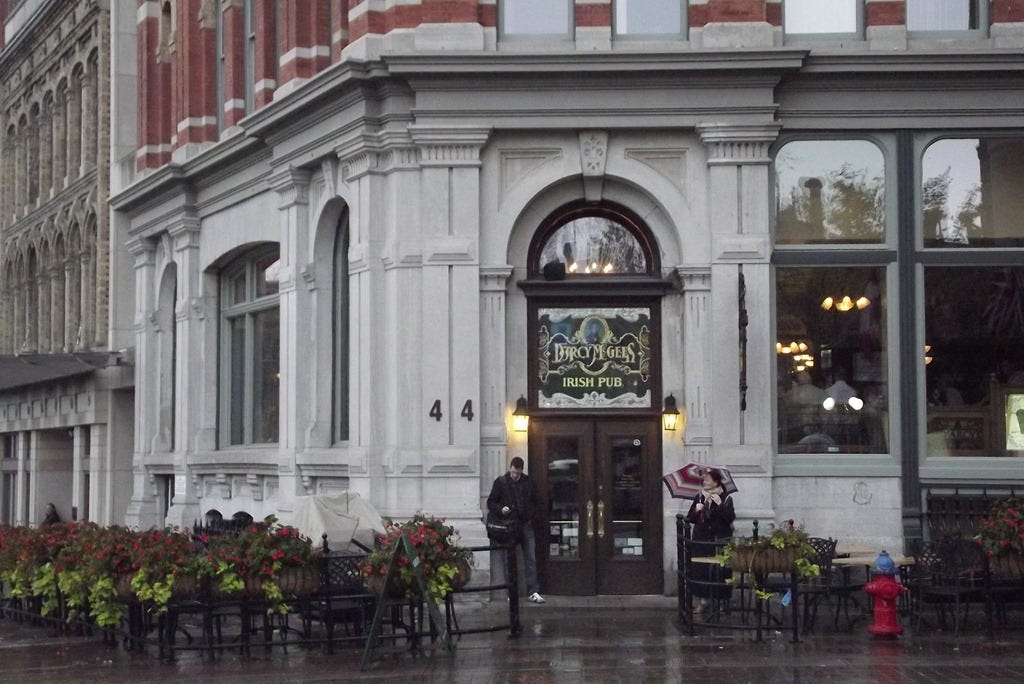
D’Arcy McGee’s is prime political and commercial real estate - located at the corner of Sparks Street and Elgin Street. Few people make the connection that this is the street where Thomas D’Arcy McGee, father of Confederation, was assassinated.
McGee’s life and death can tell us a lot about how we came to be as a nation and why we took such a different path than our neighbours to the south.
McGee was born in Carlingford, Ireland, in 1825. Ireland was still nursing the wounds of the bloody and failed 1798 uprising. McGee was a revolutionary from a young age, having been raised on the stories of resistance and having witnessed the abuse suffered by the Irish people.
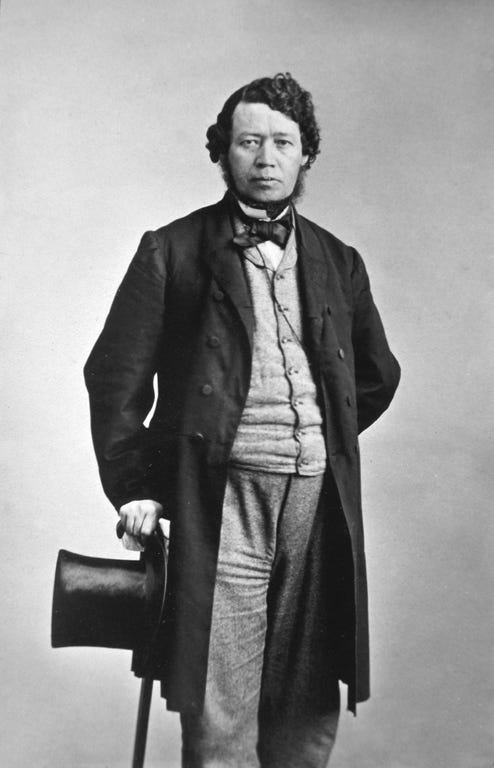
During the horrific famine, he joined a mass exodus of Irish to Boston. In the United States, he continued the cause of Irish independence. He was a fierce debater and agitator for Irish freedom.
At the time, the symbol of British power on the continent was in the neighbouring territories of the Maritimes, along with Upper and Lower Canada. McGee called for the expulsion of the British and the takeover of the territories by the United States.
“Either by purchase, conquest, or stipulation, Canada must be yielded by Great Britain to this Republic,” he stated boldly.
But as McGee travelled the United States, he witnessed the growing intolerance of the nation, particularly against the Irish immigrants. He began to question his allegiance. In 1857, he moved to Montreal. He became active in the politics of Lower Canada.
The colonies that made up British North America were deeply divided along religious and linguistic lines. The Orange Order was a powerful political force. Street battles between Francophones and Anglophones were common, as were fights throughout the Maritimes and Upper Canada between the Orangists and the Irish Catholic settlers.
And yet, McGee began to believe that despite these deep divides, the Irish immigrants stood a better chance in Canada, even though it was under the British flag, than in the American republic. It was within this evolving political worldview that McGee joined the political leaders in Charlottetown to discuss the possibility of building an independent nation on the American border.
The meeting was held in 1864, as the United States was tearing itself apart in the Civil War. McGee argued that the only way for the new nation of Canada to survive was to pursue a policy of compromise and tolerance.
The regions were deeply divided in terms of language, regional sovereignty, and over questions as to whether the power of the majority could overrule the rights of the religious and linguistic minorities.
McGee threw himself into the task of finding a compromise. His language was fiery and Elbows Up:
“The one thing needed for making Canada the happiest of homes is to rub down all sharp angles and to remove those asperities which divide our people on questions of origin and religious profession. The man who says this cannot be done … is a blockhead.”
The fierce Irishman D’Arcy McGee found common ground with the Orange Scottish leader John A. MacDonald.
The option before them was clear: either they found a way to work together or watch the territories be absorbed into the violence that was consuming the United States.
As the Americans sacrificed 700,000 of their young men on the killing fields of Antietam and Cold Harbor, the Canadian colonists were figuring out how to knit a new nation together despite their divides.
In championing this vision of a new Canada, McGee made enemies with his former revolutionary comrades. They resented how the rabble rouser had turned compromiser.
They particularly hated him for publicly stating that the Irish revolutionary cause had no place in the new nation. He believed that people who came to Canada had to find ways to put their enmity aside and work together.
The result was the agreement to make Canada a reality.
On July 1, 1867, the nation of Canada was born, and McGee was one of the men who made it possible.
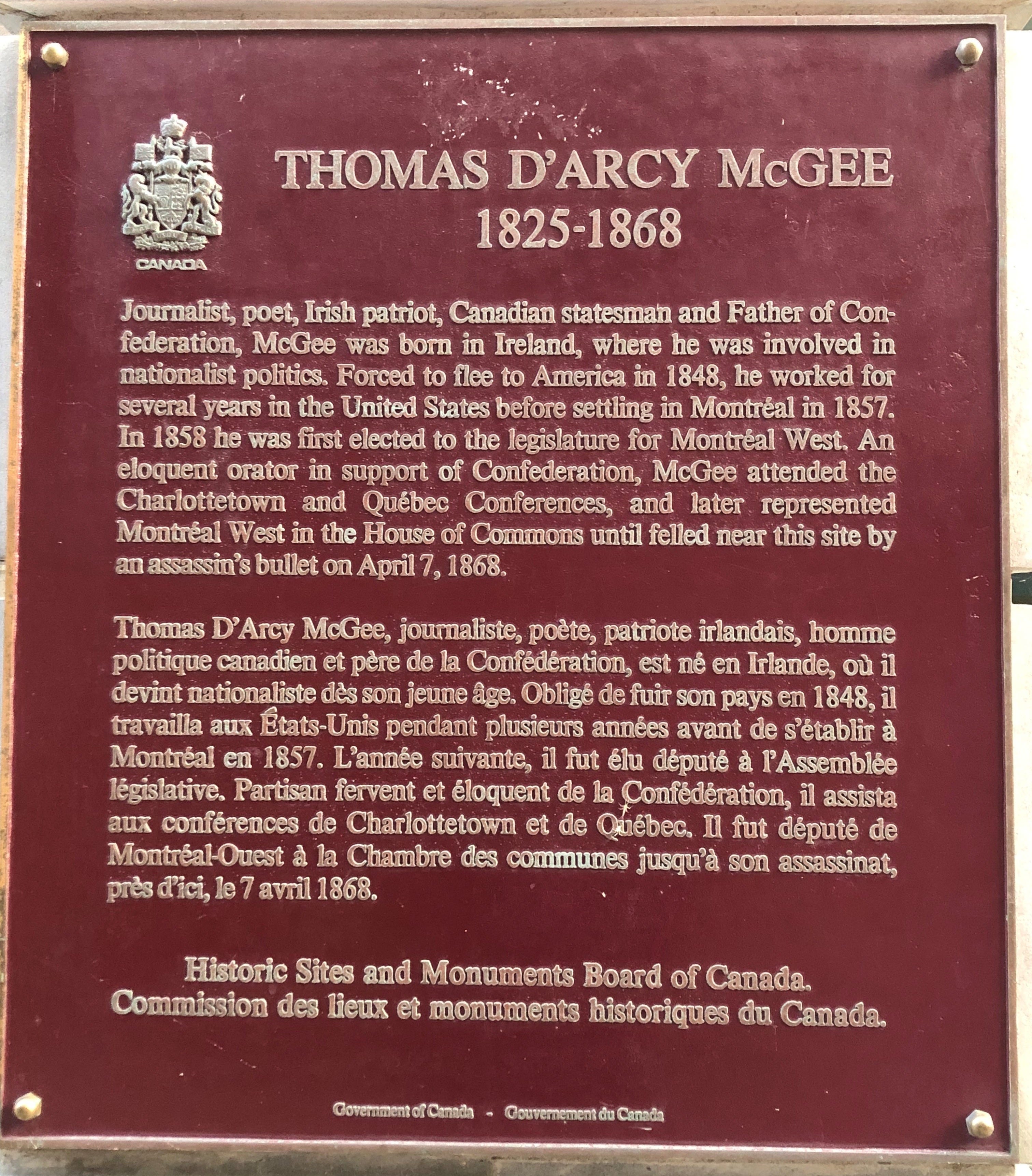
But in 1868, the Fenians took their revenge – murdering him just outside his residence on Sparks Street. The killing shocked the nation. Over 80,000 people attended his funeral in Montreal, representing nearly 75% of the city’s population at the time.
McGee is rightfully remembered as a “Father of Confederation.” But he was more than that. He gave his life for a powerful principle: that politics must be about finding ways to bring people together rather than divide them. This willingness to compromise and avoid overly heated political rhetoric has defined Canada ever since.
His death played a role in setting the tone of political debate for the century to come. The young nation realized that we couldn’t go down the dark road of revenge and murder. It would be another century before our country was traumatized by another political killing – the murder of provincial minister Pierre Laporte in 1970.
And like McGee’s killing, the murder of Laporte shocked the nation and brought people back from the brink. People realized that we needed to find peaceful means to solve our differences.
A half-century on since the horrific death of Laporte, and memories were starting to grow short. A new generation of right-wing extremists was emboldened by the ability to make threats online and to use the power of intimidation. They had forgotten the lessons of McGee and Laporte. Threats against political violence weren’t just made against party leaders but against people in all manner of public life. I have lost count of the death threats made against me.
However, in some ways, Trump’s ascendancy has been a wake-up call to our nation.
He is showing us the dangers of giving in to the politics of rage and hate. Canadians are rethinking our nation and our responsibilities to one another. We are reminded that the values of compromise and tolerance aren’t signs of weakness, but rather a bedrock of strength.
This is why we need to rethink the role of D’Arcy McGee in the founding of Canada.
McGee’s is a great pub. Where all the political classes come together over drinks. I think D’Arcy McGee would have appreciated this pub as a great memorial. But as we watch a new civil war consume our neighbour to the south, let’s conjure the spirit of Thomas D’Arcy McGee and renew our commitment to this project called Canada.
"He gave his life for a powerful principle: that politics must be about finding ways to bring people together rather than divide them."
Great writing, Charlie !
Thank you for this article and the history of the great country of Canada.