

As a Labour Day reflection, I would like to share some research I put together for my book Cobalt: Cradle of the Demon Metals.
In my twenties, I was invited to meet an elderly man living in a nursing home in the north. I didn’t know who he was, but when he found out I lived in Cobalt, he came alive with stories.
His name was Bob Carlin.
Bob shared a revolutionary history with me that, by then, our region’s historians had all but erased.
I still have the cassette tapes where he told the stories of incredible men like Big Jim McGuire and Big Bill Haywood.
I made it my mission to keep the stories alive.
The class war arrived in Northern Ontario when the silver mining camp of Cobalt, Ontario, was little more than a few tents on the hills. The class war came from the mining camps of Idaho, Montana and Colorado.
Mining men came north in 1904-05 to open up the rich silver fields of the north. Many of them — management and workers — were veterans of the brutal Colorado Labour War that was then being fought with guns and state repression against the organized resistance of the Western Federation of Miners (WFM).
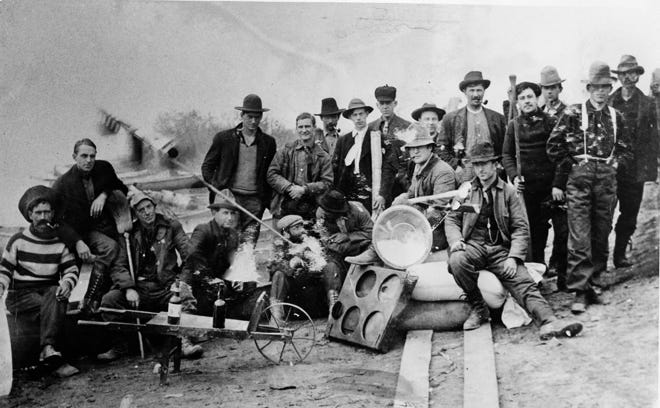
The mine owners in the West demonized the WFM as anarchist revolutionaries, but in Northern Ontario they were the very prospectors and “packsack” miners who were essential in getting the mines into production. These were men of fire and spirit. They sang defiant songs, taunting the bosses and promising revolution.
Richard Brazier, who helped create the famous “Little Red Songbook” of revolutionary worker anthems for the Wobblies (Industrial Workers of the World), said the songs he learned from the Cobalt miners influenced him.
Cobalt’s silver fields were incredibly rich, but developing 100-plus mining operations was chaotic. In the rush to loot the world’s great treasure boxes, workers’ rights and safety were ignored. The sudden flush of silver money sparked riots on Wall Street and hit sleepy Edwardian Canada like a high-octane jolt — strong enough to change Canada’s development trajectory.
The need for workers drew large numbers of immigrants from across Europe and Canada’s rural regions.
Bob Carlin arrived in Cobalt as a fifteen-year-old Catholic boy from the Ottawa Valley. His only education was at the little red schoolhouse where his mother taught.
He worked six days a week and went to Mass on Sunday. Carlin’s lack of political awareness was typical of the farming communities of central Canada at the time, but working in Cobalt radicalized him — first because of the harsh conditions workers faced, and second because of the political influences coming in from the western United States.
“I learned a lot from the hard-nosed wobbly-socialists. I even added a new phrase to my limited vocabulary: class struggle.
These words symbolized the very soul and philosophy of the army that I had just joined — the Western Federation of Miners, and that I was shortly to become a permanent foot soldier in.”
Carlin would go on to be one of the pivotal labour leaders in Canada’s mining towns.
Facing off against these young and radicalized workers were numerous managers from the recent Colorado Labour War, a labour conflict fought with guns, state violence and mass arrests. It has been called the most violent labour struggle in American history.
Cobalt mine manager Robert Livermore had been a hired gunman in the Colorado war. Livermore had worked for the Smuggler Union Mine in Telluride, Colorado.
This was a battle site where WFM organizer Vincent St. John shipped in 250 guns and 50,000 rounds of ammunition to arm miners after he learned the governor was sending in troops.
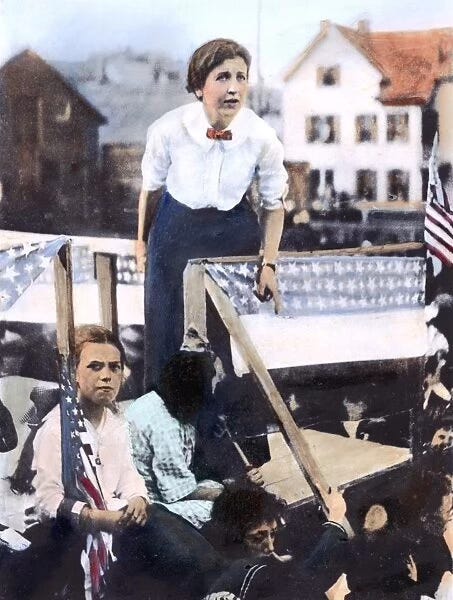
St. John came to Cobalt as an organizer for the Wobblies. Another Wobbly activist who came north to rally the silver miners to the revolutionary cause was 19-year-old Elizabeth Gurley Flynn.
She had been called the Joan of Arc of New York’s Lower East Side.
When William “Big Bill” Haywood visited Cobalt, he spoke to hundreds of workers at the local Opera Hall. He was considered the most dangerous man in America, having recently been freed on charges of ordering the murder of former Idaho governor Frank Steunenberg. The Idaho governor had been a vicious enemy of the miners’ union.
On March 19, 1906, the Cobalt Miners Union, Local 146 of the WFM, was established. Confrontation with the mine owners didn’t take long.
On July 2, 1907, Irish Canadian miner James “Big Jim” McGuire showed up at the Nipissing Mine property and told the men that the time had come for them to stand up to the company. The strike spread to the multitude of mining operations, and soon there were three thousand men on strike.
The Montreal Star reported that the mine owners were “determined to fight this thing to the finish and be satisfied with nothing less than the unconditional surrender of the strikers.”
The owners accused the WFM of being a “pernicious and foreign influence,” even though many mine owners and managers were themselves American or British capitalists.
The mines were forced to bring in scab labour to keep running. The problem was that the only way into town was by rail. The union established pickets to prevent replacement workers from getting off the trains. This led to daily confrontations at the station, as mine guards and strikers jostled along the length of the cars.
At the direction of the Attorney General’s office, local police hired a number of private security guards to keep the peace at the picket lines.
Big Jim McGuire was charged with assault after an altercation with a special constable at the Nipissing Mine. The union men were bitter about the willingness of the police and courts to side with the companies. As McGuire later recalled,
“The mine managers succeeded in getting out court injunctions restraining us from doing everything but breathing.”
However, mine management was frustrated by what they saw as the authorities’ refusal to use stronger tactics to break the strike.
In particular, the owners were enraged by IWW organizer Robert Roadhouse. He had come to Cobalt as an agitator and was excellent at the job.
Roadhouse hosted nightly rallies in the town square, where he lambasted the corporate owners in front of large crowds. These rallies were the first of what later became famous as the Wobblies’ “free speech” rallies of resistance in San Francisco and Seattle.
Jim McGuire described him as a cross between “Big Bill Haywood and Joe Hill”:
“Of all the rough-and-tumble orators I ever heard, Bob was easily the best. He spoke every night on the Cobalt square in front of the strike-bearers, bankers, mine managers, businessmen and speculators... and held them all spellbound for one to two hours every evening for over two months.”
Mine managers with experience in Colorado were frustrated that the police were not taking any steps to clear the town square and imprison men like Roadhouse and McGuire. In a letter to the Attorney General, Colorado veteran Frank Loring denounced the Roadhouse rallies and local officials’ refusal to make arrests.
He painted the situation as if it were an act of revolutionary insurrection:
“Every night on the public square orators representing the Western Federation of Miners and the Cobalt Miners Union address strikers in an advocacy of principles of lawlessness and anarchy and make personal assaults on the mine managers and upon the Ontario Government. . . the effect of their presence is to intimidate which they succeed in doing in many cases.”
Roadhouse publicly ridiculed the efforts of mine owners to put a stop to his rallies. When he was finally brought up on charges, the case was transferred to Toronto, where Justice Thomas Graves Meredith threw it out. He was back in the town square the next night, taunting the mine owners over their failed attempt to keep him silent.
However, as the strike wore on, worker solidarity became more difficult to sustain. The men had no wages to feed their families, and the owners began evicting the families of striking miners.
The Cobalt general strike lasted two months and had a huge financial impact on the fledgling camp. Smaller mines — mostly Canadian-owned — broke solidarity with the mine owners and settled on terms favourable to the miners.
Nonetheless, the determination of the larger companies to destroy the union resulted in a huge shake-up of the mining population. More than 1,500 men left the camp. American miners were blacklisted as troublemakers, and this represented the end of a distinctly American phase of the Cobalt story. But the radical roots were now embedded in both the Canadian and immigrant workers.
Cobalt became a hub of political activism, and the centre of the newly established District 17 of the Western Federation of Miners. Jim McGuire worked as a union organizer across the north and as a representative for the Socialist Party of Canada.
Another Cobalt union leader, Long Angus MacDonald, shocked the establishment when he was elected to Parliament in a landslide, as a candidate in the left-wing Independent Labour Party.
As Cobalt investment and mining fever spread across the north, so too did class resistance. Within the first few years after the Cobalt discovery, an array of mining towns in Northern Ontario were founded, and the WFM workers’ hall became the meeting place for the working class in each of those camps.
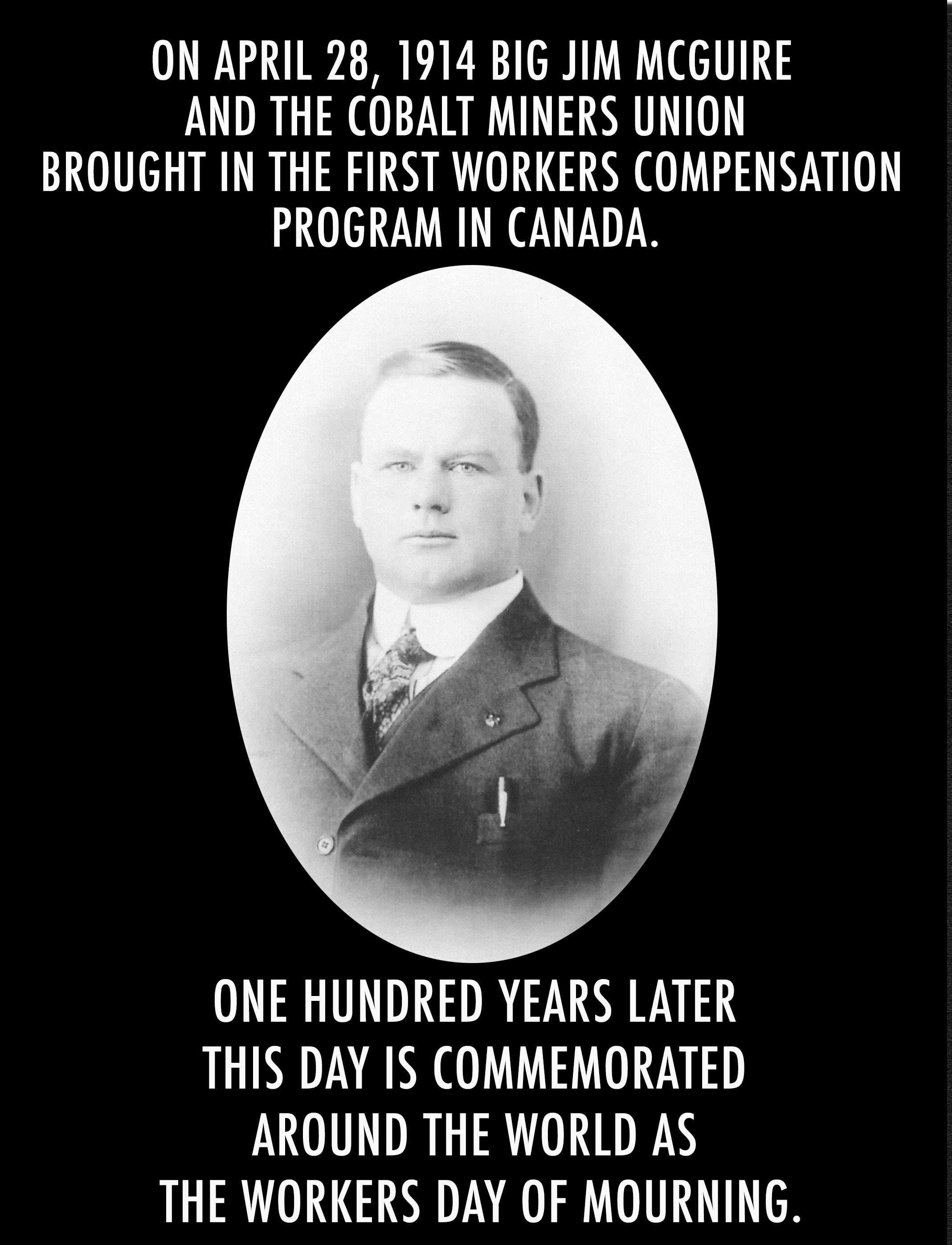
In 1914, Cobalt silver miners won the right to the eight-hour day for underground miners. But the high point of the class war came on April 28, 1914, when the Cobalt Miners’ Union helped force the passage of the Ontario Workmen’s Compensation Act — the first Canadian statute designed to provide benefits, medical care, and rehabilitation services to individuals who suffered workplace injuries.
April 28 is now commemorated worldwide as Workers Day of Mourning.
For a long time, the story of the Cobalt Miners Union seemed to be a tale from another time. But Cobalt was a battleground for multiple visions of how the wealth of the earth could be used and who should be its beneficiaries.
Issues of social justice that dominate the discourse today — resource exploitation versus environmental concerns and Indigenous rights; multicultural accommodation versus xenophobic suspicion; the power of the one percent in the face of class resistance — were battled out in the shabby streets of Cobalt.
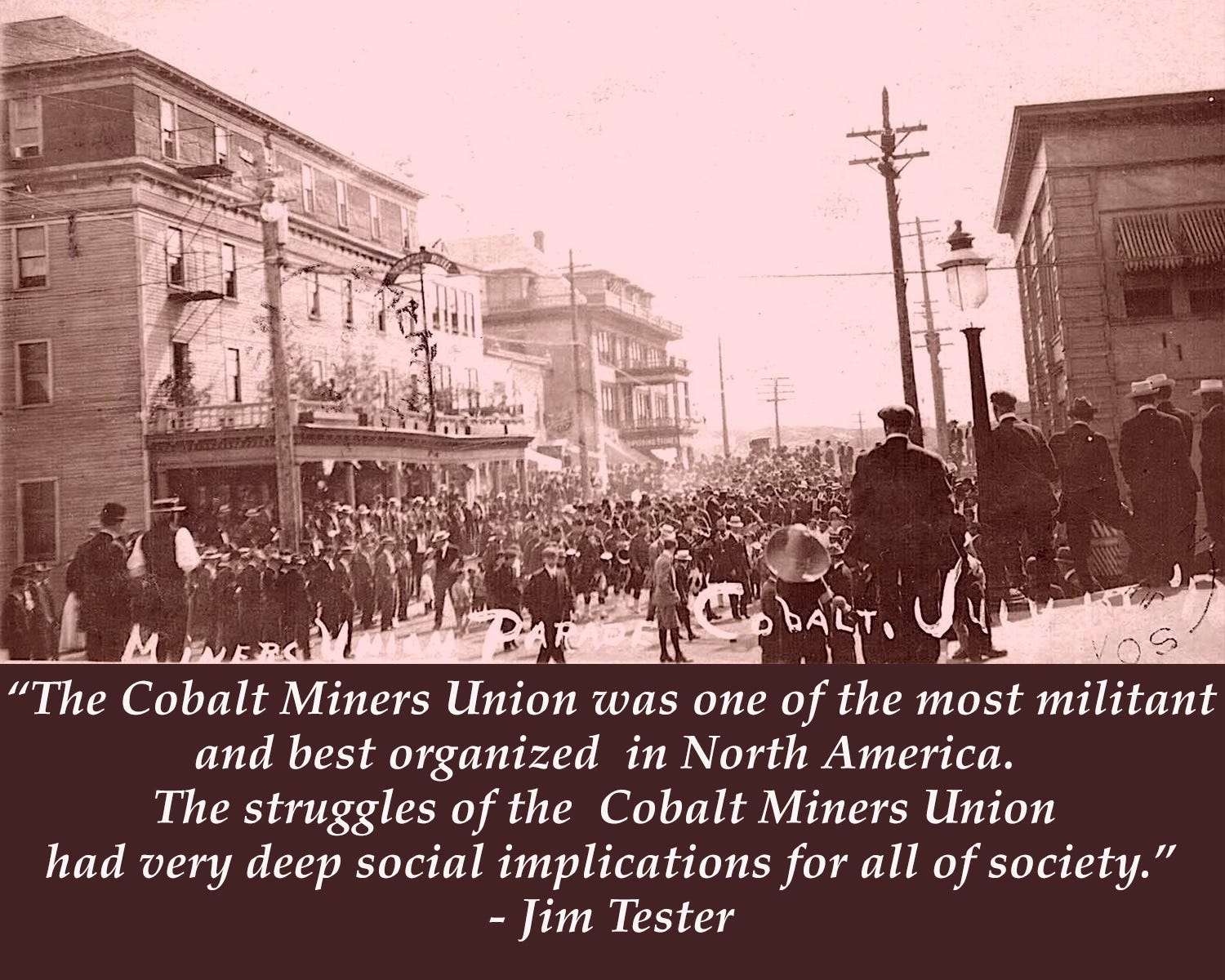
Jim Tester, a miner/historian in Sudbury, wrote that the struggle of the Cobalt Miners Union had an impact far beyond the North.
“The struggle of the Cobalt Miners’ Union had very deep social significance. It affected the whole of society. And the fact that Cobalt should be the key area for the whole trade movement in Canada is a significant thing. Not nearly enough credit has been given to the Cobalt miners.”
In an age of toxic oligarchs and people suffering from increasingly precarious work, the stories of Big Jim McGuire, Bob Carlin and Elizabeth Gurley Flynn seem less like ancient history and more like lessons for today.
Charlie if you taught history when I was a student, many years ago, I would have enjoyed the lessons 🇨🇦❤️
Thank you for bringing this history forward. As Yuval Harari has said, people see therapists to uncover suppressed elements of their own selves, and studying history is what countries must do to realize and reflect on their own darkest and suppressed origins.